Showing 25–27 of 27 results
-
$155.00
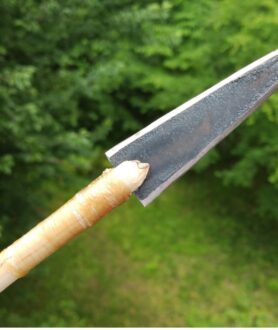
This is a spot-on copy of a set of 4 matching Sioux/Lakota arrows from the Northern Great Plains. The artifacts are in the Smithsonian’s collection and were originally acquired in the 1870’s. This arrow copies every aspect of the originals and is a museum-quality replica.
The shaft is dogwood, with 3 straight shaft grooves that go from the forward fletch wrap to the point. The metal arrowhead is made from a circular saw blade that’s been blackened to mimic the original trade points, then the edges were ground to expose the silver metal underneath. The tip is rounded, which some trade points had. This was to cause the point to glance off heavy bone and continue forward instead of piercing the bone and stopping the arrow’s forward momentum. The point is held in place with a strong wrapping of sinew.
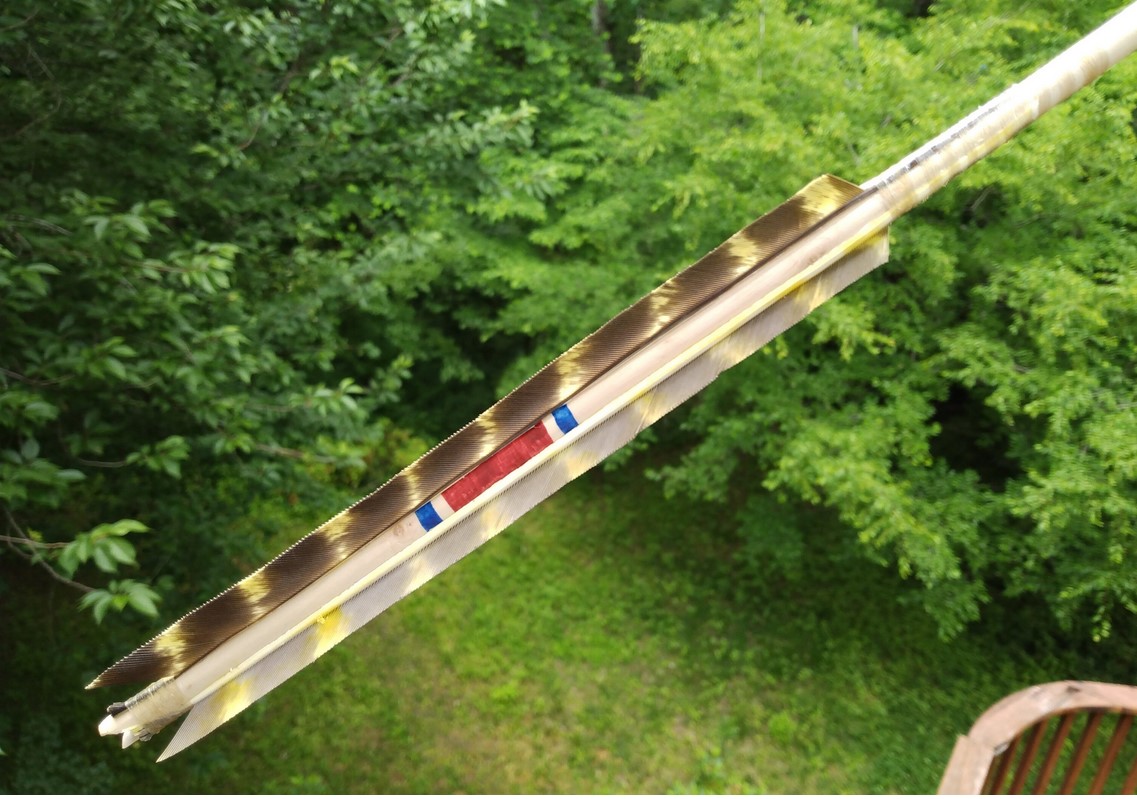
The fletch is 3 turkey wing feathers secured with sinew and glued with hide glue. The feathers have been dyed yellow, just like the feathers on the original arrow. And finally the red and blue paint design copies the design on the original arrow.
This arrow is shipped to you in a sturdy PVC pipe to ensure safe delivery to your door. Free shipping to all destinations within the U.S.
-
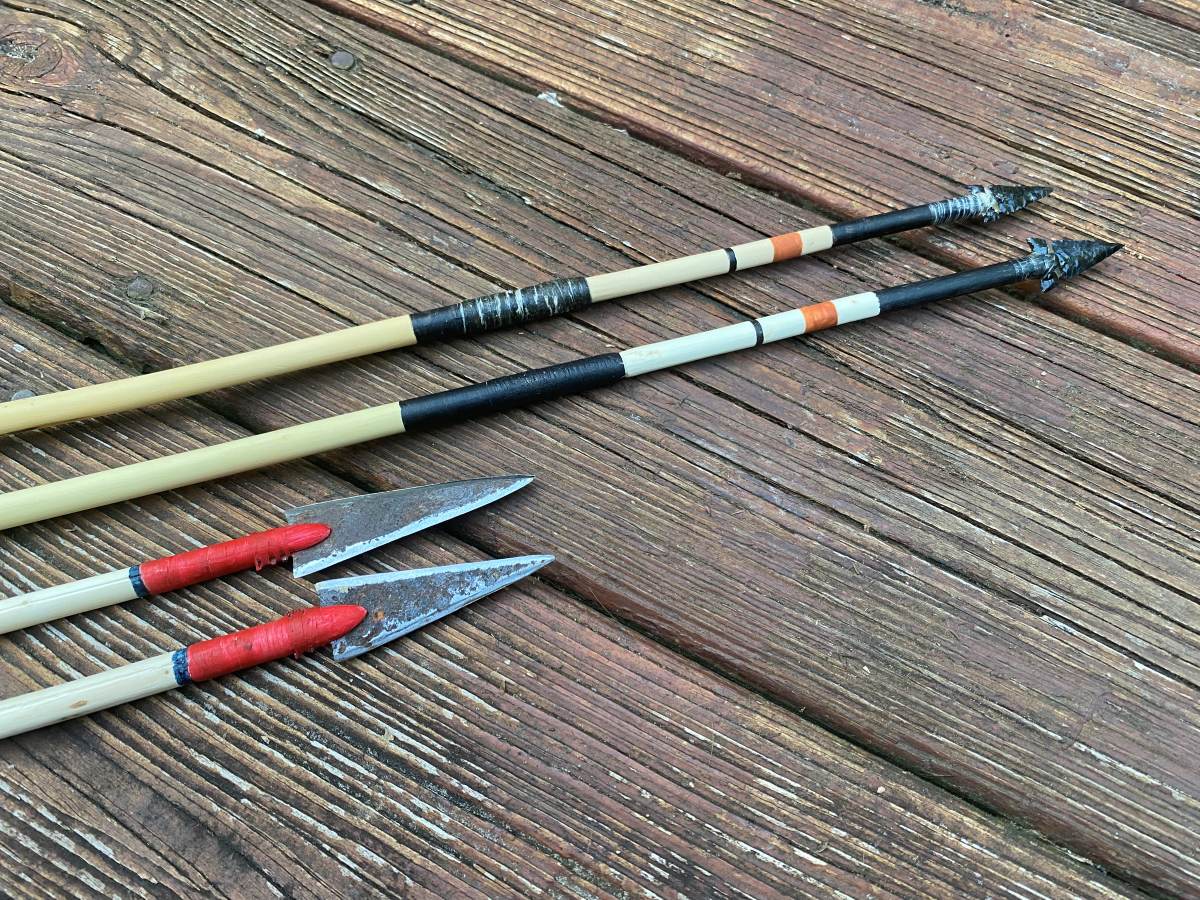
This group of replica arrows consists of 2 Wintu arrows from Northern California and 2 Pawnee arrows from the central Plains. The Wintu arrows have main shafts of syringa with hardwood shoot foreshafts tipped with obsidian points held with pine sap glue and deer sinew. They’re fletched with turkey wing feathers that are also held with sinew. The paint design copies those arrows exactly. These arrows copy a set of 15 matched Wintu arrows once owned by archery Hall of Famer Dr. Bert Grayson and are now in the archery collection at the Univ. of Missouri.
The Pawnee arrows are hardwood shoot shafts fletched with a mix of turkey wing and tail feathers. The wing feathers are set as the cock feather and are also dyed yellow. They’re secured front and back with deer sinew. The iron tips are made from old barrel hoops like the old ones were and they’re also held with a wrapping of deer sinew. These arrows are copied after a set of Pawnee arrows that were part of an entire archery set that included a bow, bowcase and quiver that was auctioned off several years ago and are now in a private collection.
-
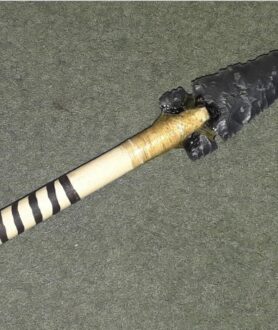
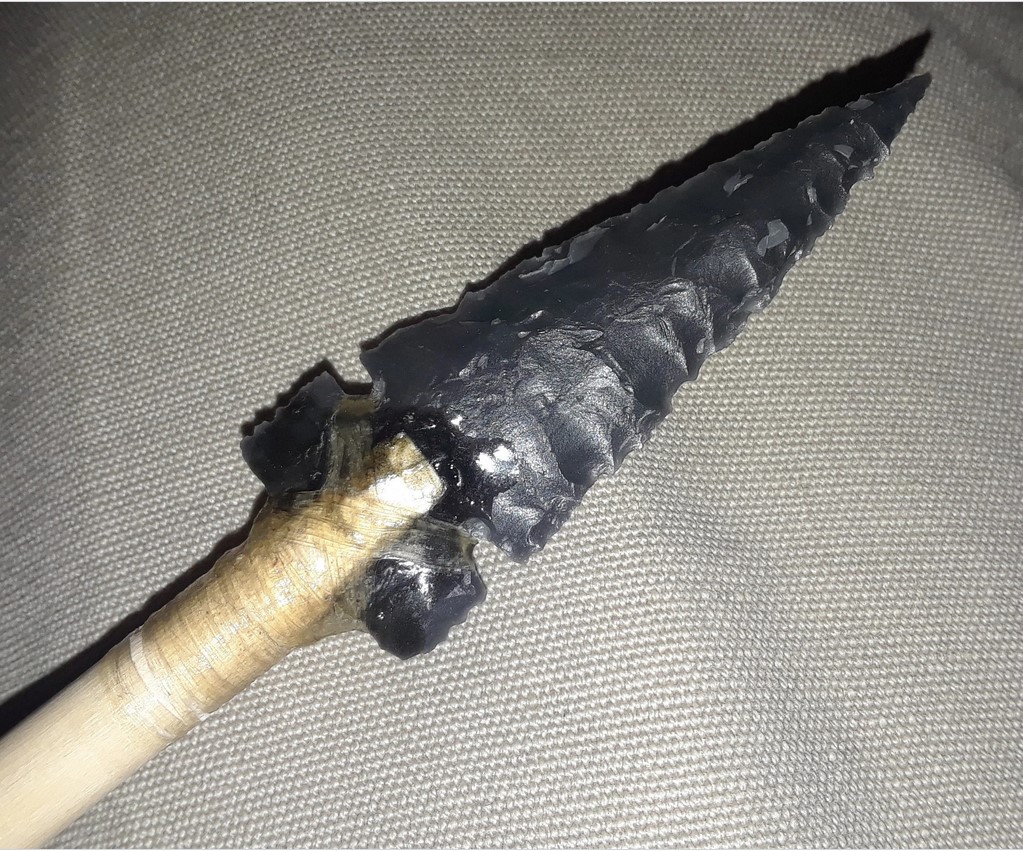
$165.00
This arrow is a museum-quality copy of a set of 4 Northern California Wintu arrows in the Smithsonian’s collections that I got to examine in 2012. This arrows copies every aspect of the original arrows as closely as possible.
The main shaft is made of a syringa shoot. It’s fletched with Canada Goose wing feathers that are lashed front and back with sinew and also glued with hide glue. The paints are natural earth ochre and charcoal and they copy the original designs. The point is made of dacite, which is a grainier type of obsidian (the original points were also dacite, which I’ve never seen on original arrows before). The point is mounted to a short dogwood foreshaft with pine sap glue and a heavy wrapping of deer sinew.
The original arrows were noted to have been collected in northern California but the exact tribe was unknown, even though they had some Wintu traits that led me to believe they could be Wintu or a surrounding tribe. I was going to list this as a “mystery” tribe. But before I did, I consulted with the only west coast Native Bow expert I know (Steve Allely) as to his opinion on their tribal origin. He’s certain the original arrows were from the McCloud River Wintu, as they made some of the beefiest arrows of all the N. California tribes. And the original arrows certainly were beefy. I definitely trust his judgement on this topic and therefore will agree with his expert opinion wholeheartedly. Thank you very much Steve for your input on this. So there you go…McCloud River Wintu arrow, compliments of the expert Steve Allely.
This arrow is shipped in a sturdy PVC pipe to ensure safe delivery to your door. Small information card included with the arrow.