Showing 37–47 of 47 results
-
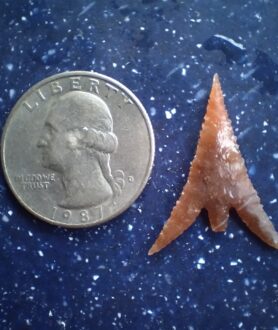
This small but exquisite Gunther Barbed point is made of coastal plains flint, but it has the same color as the jasper that many authentic Gunther Barbed points are made from. It’s flat, thin, and has very clean flaking on both faces of the point. Despite its small size, arrow points of this size were commonly used in prehistory for hunting big game like deer and bighorn sheep.
Free shipping to all destinations within the U.S.
-
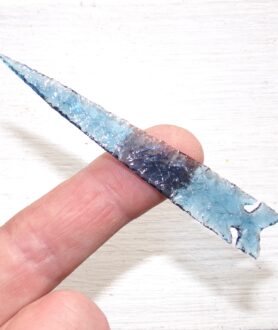
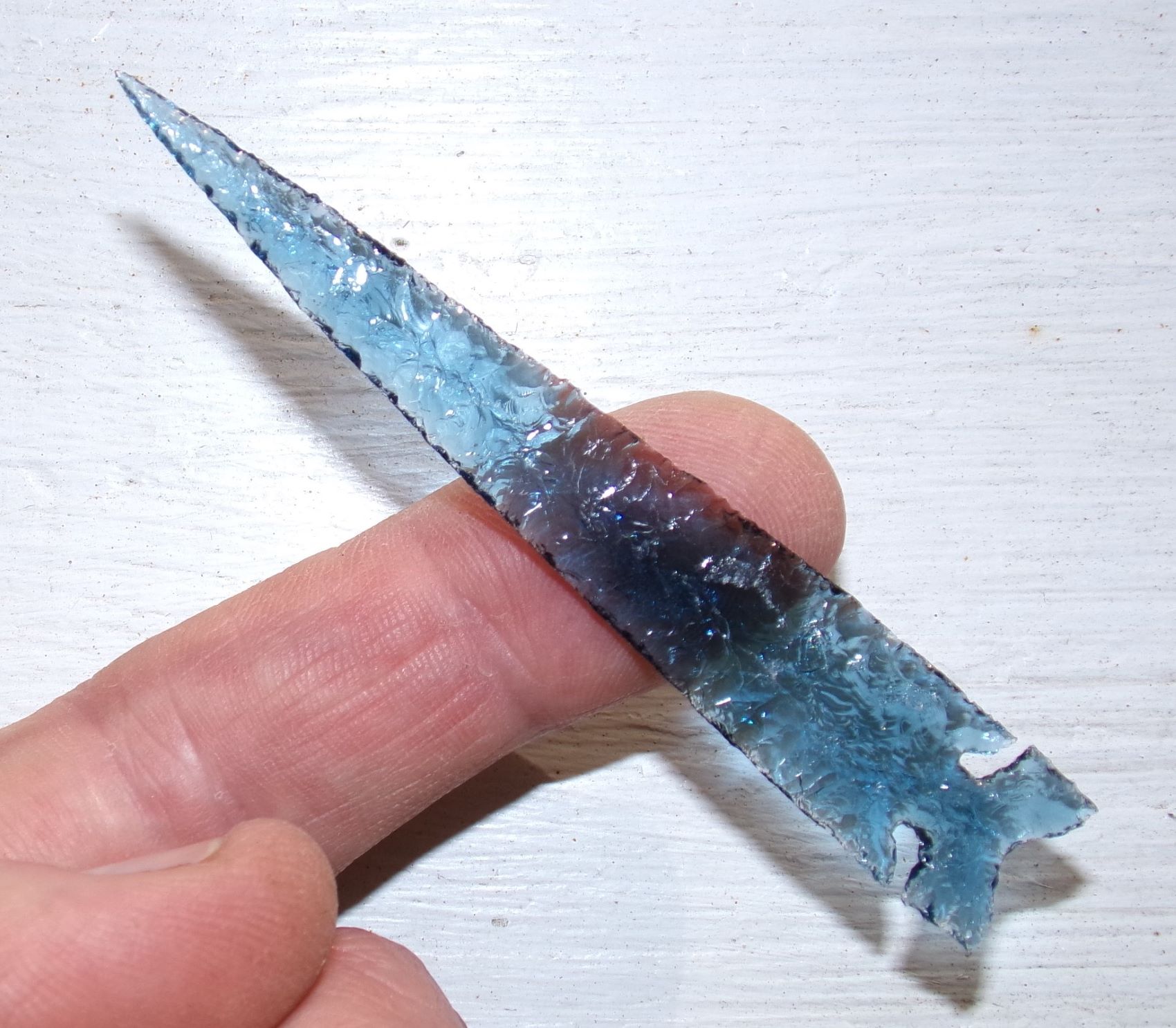
This cool looking Wintu point is made of blue glass and it has a very long, lean profile with delicately made upturned notches. This point is flat and also quite thin and is a beautiful example of fine flintknapped art. The Wintu people lived in Northern California near the town of Redding and originally they made their exquisite arrow points out of obsidian, but started using glass after white settlers moved in.
Arrowhead Specs: 3″ long x 1/2″ wide.
-
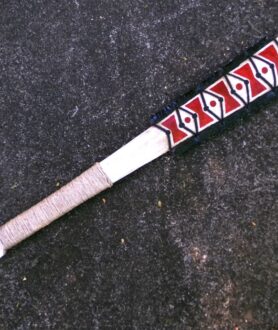
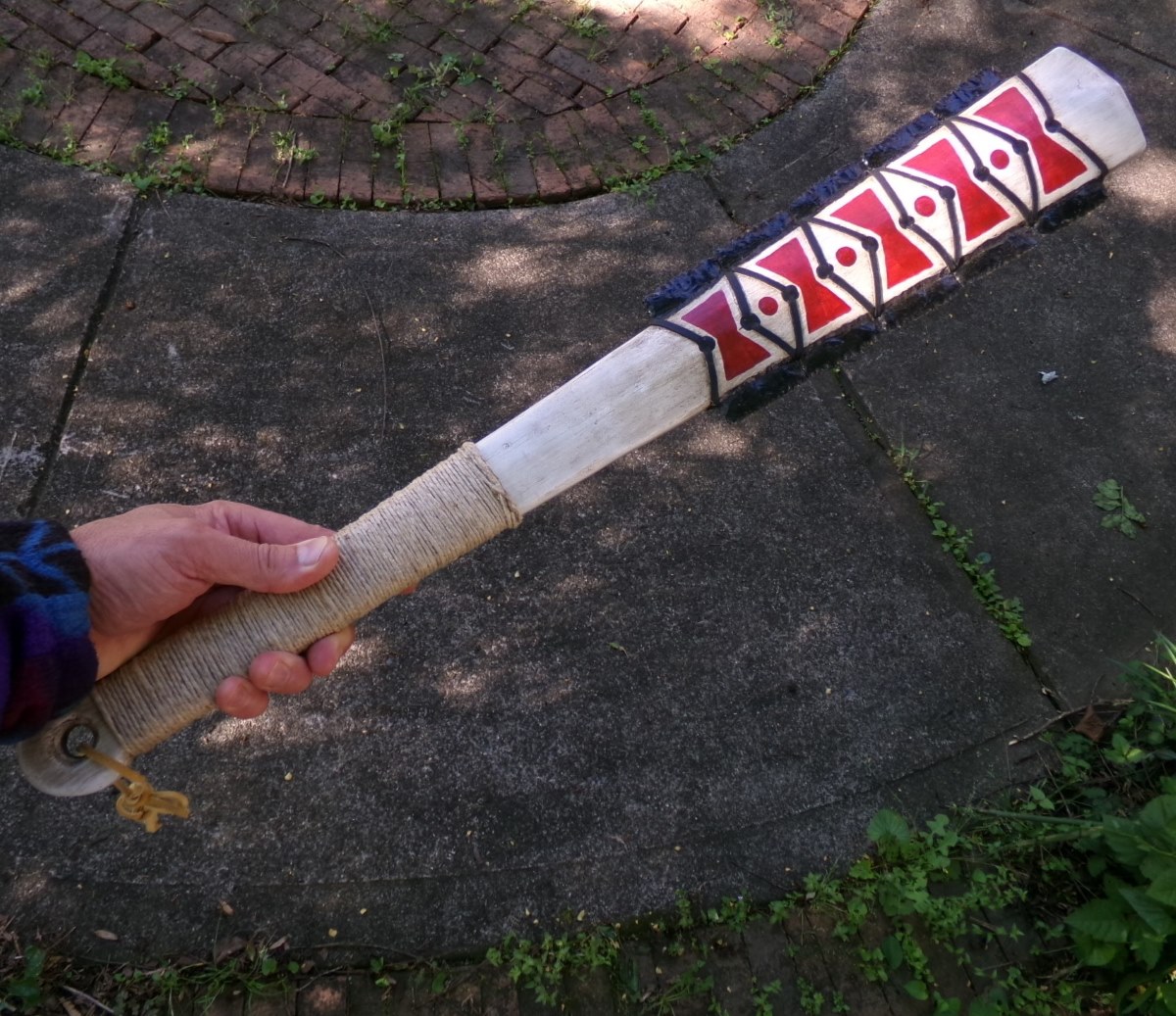
This is a Maquahuitl, which is essentially an Aztec broad sword that was used in prehistory in warfare. This weapon that could inflict incredibly devastating wounds to an enemy. This one was made by my good friend Dan Spier. This is a flattened, wooden paddle that has obsidian blades secured along each edge. The only difference between this Maquahuitl and the original ones is that this one has bifacially flaked obsidian blades instead of the bladelets that were used in the original Maquahuitls made by the Aztecs. The obsidian blades in this weapon aren’t quite as sharp as the bladelets, but make no mistake…this weapon is just as deadly as the original ones. The bifacially flaked obsidian edges in this one are more durable and aren’t as easily chipped or dulled as actual bladelets. This sword is 28 inches in long total length.
This Aztec sword must be handled very carefully! Customer assumes all responsibilities with this product.
Free shipping within the U.S.
-
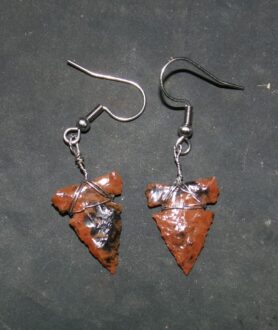
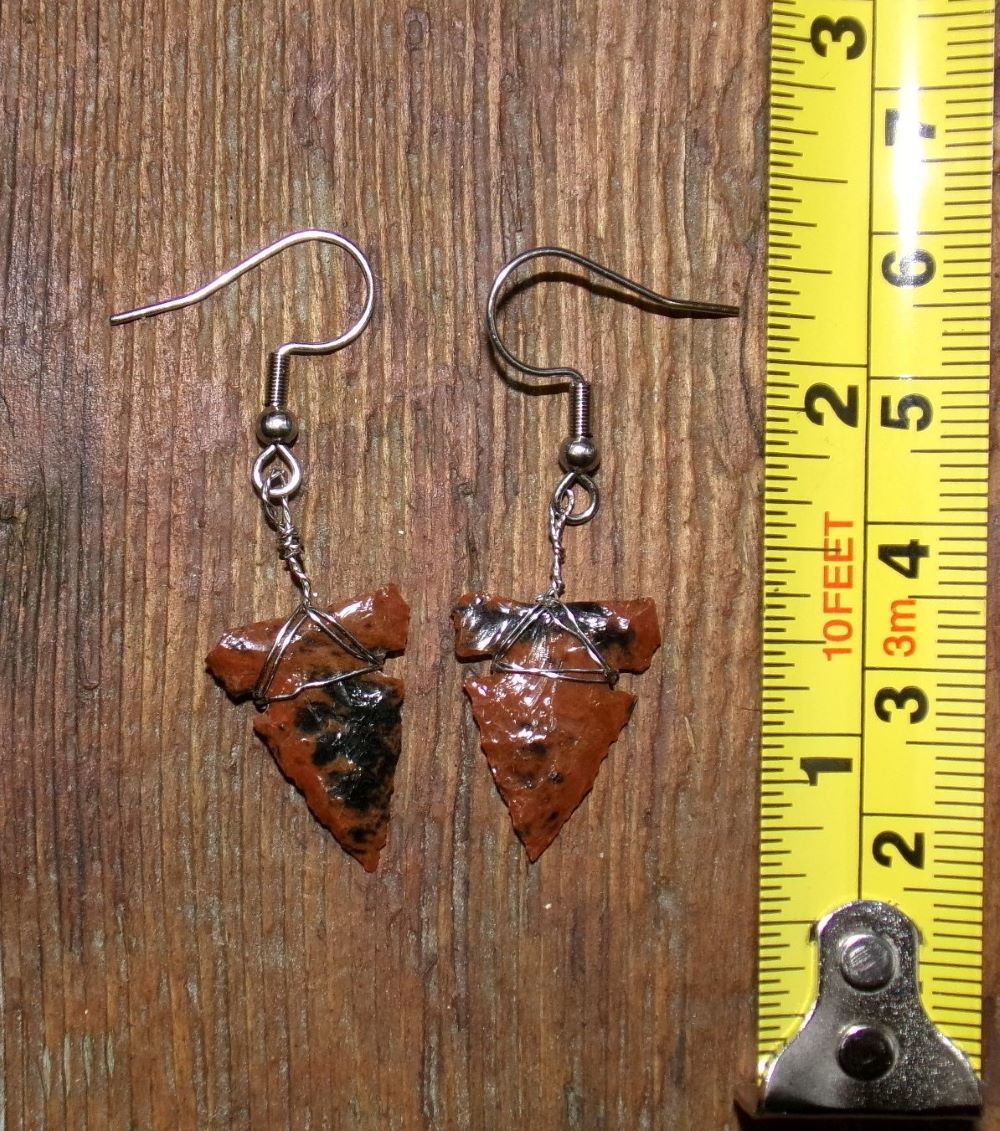
Here’s a pretty set of earrings that feature small matching arrowheads made of mottled brown and black mahogany obsidian. They’re wrapped with stainless steel wire and have hooks of hypoallergenic stainless steel. They’re small and light and easy to wear all day without feeling heavy or weighty. Free shipping within the U.S.
-
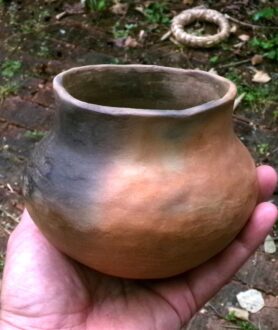
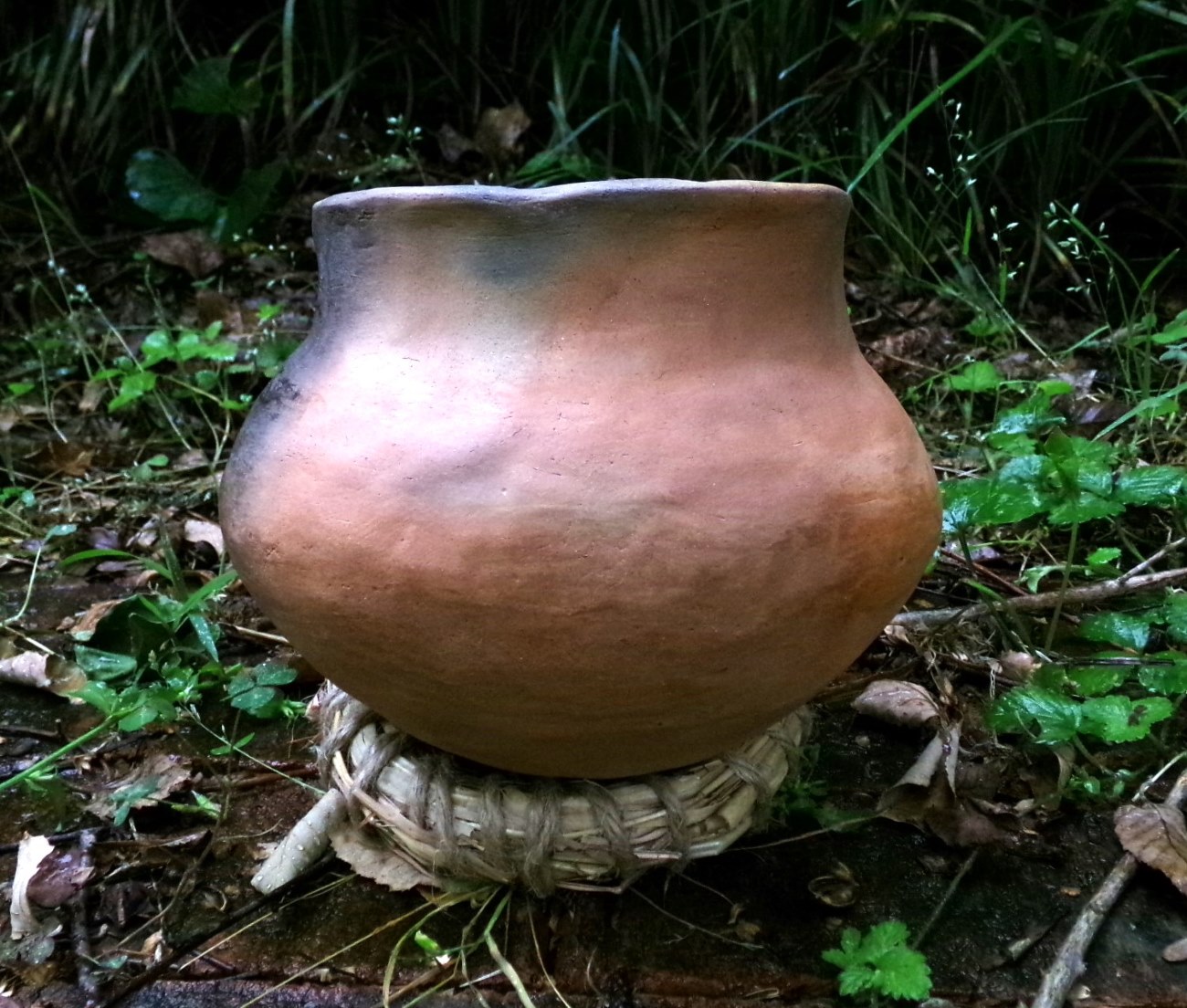
This cool primitive pot is made of lizella clay from south Georgia and was hand formed and then fired in a campfire. It has a very small hairline rim crack and another crack that runs for about 1.75 inches along the most bulbous part of the very center, but the cracks are minor. You couldn’t cook in this pot, but it is a nice display piece. Since it has a round bottom, a small ring of grass is included so you can set the pot on a flat surface and it won’t roll around.
-

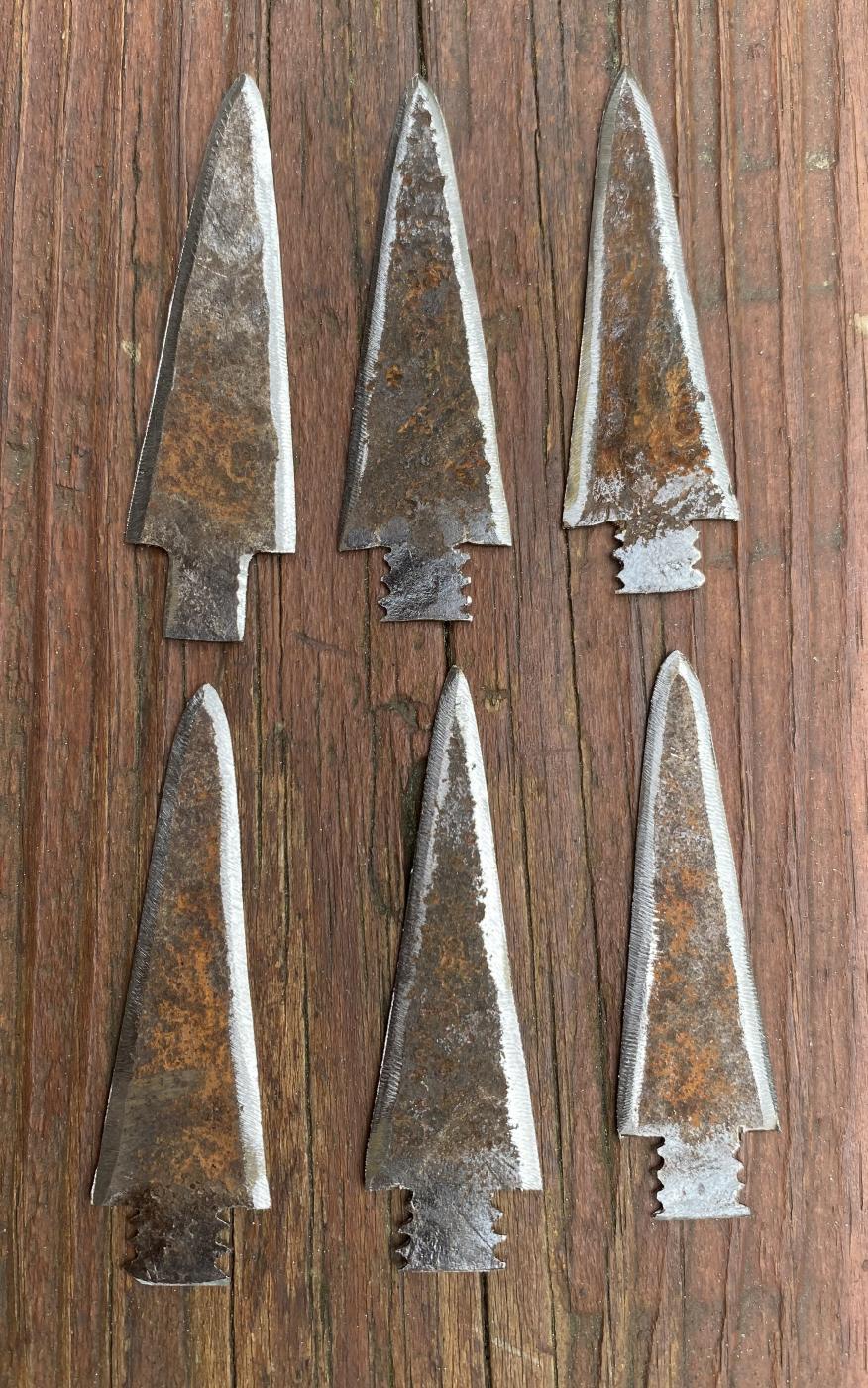
Six metal trade points that copy the arrowheads that tipped the Plains Indian arrows in the mid to late 1800’s.
-
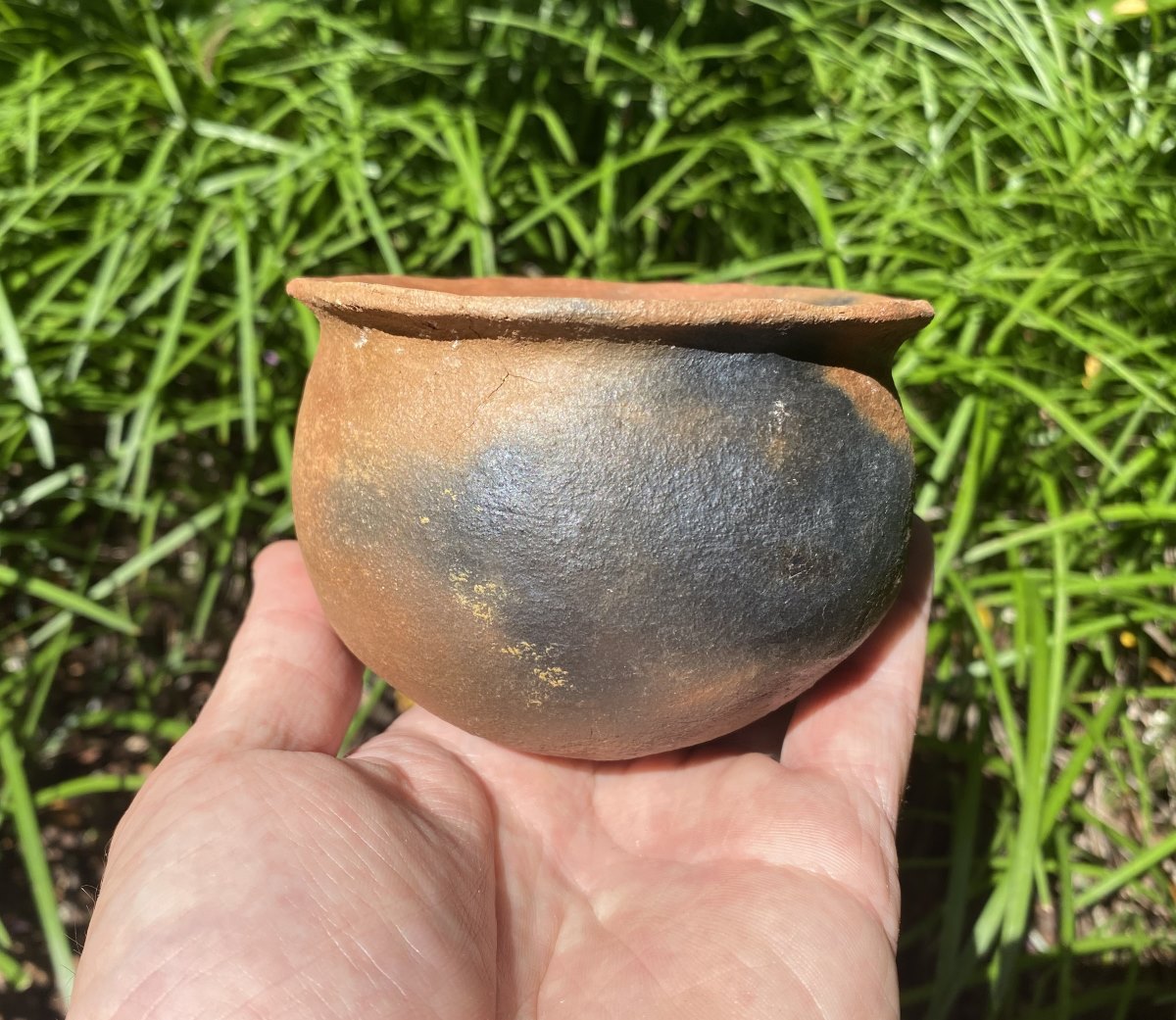
This cute little pot is made of hand dug and local clay from north Georgia. It’s tempered with quartz sand and formed by hand. Then it’s dried and fired in a campfire just like the old prehistoric pottery. Firing in a campfire creates fire clouds, which are swirls and different spots of color due to the different environments in the fire when it’s fired. This pot is about the size of a medium sized grapefruit. It has a rounded shape with a flared rim. This pot has some small, thin cracks in the rim but they’re very minor. You can’t cook in it due to the cracks, but it would be a nice display piece. It can hold potpourri, you could put some sand in the bottom and then put a candle in it, or you could use it to hold any dry materials in a small to moderate quantity. 4 inches wide and 3 inches tall. Free shipping within the U.S.
-
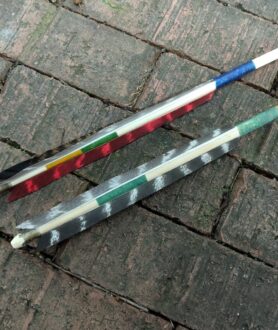
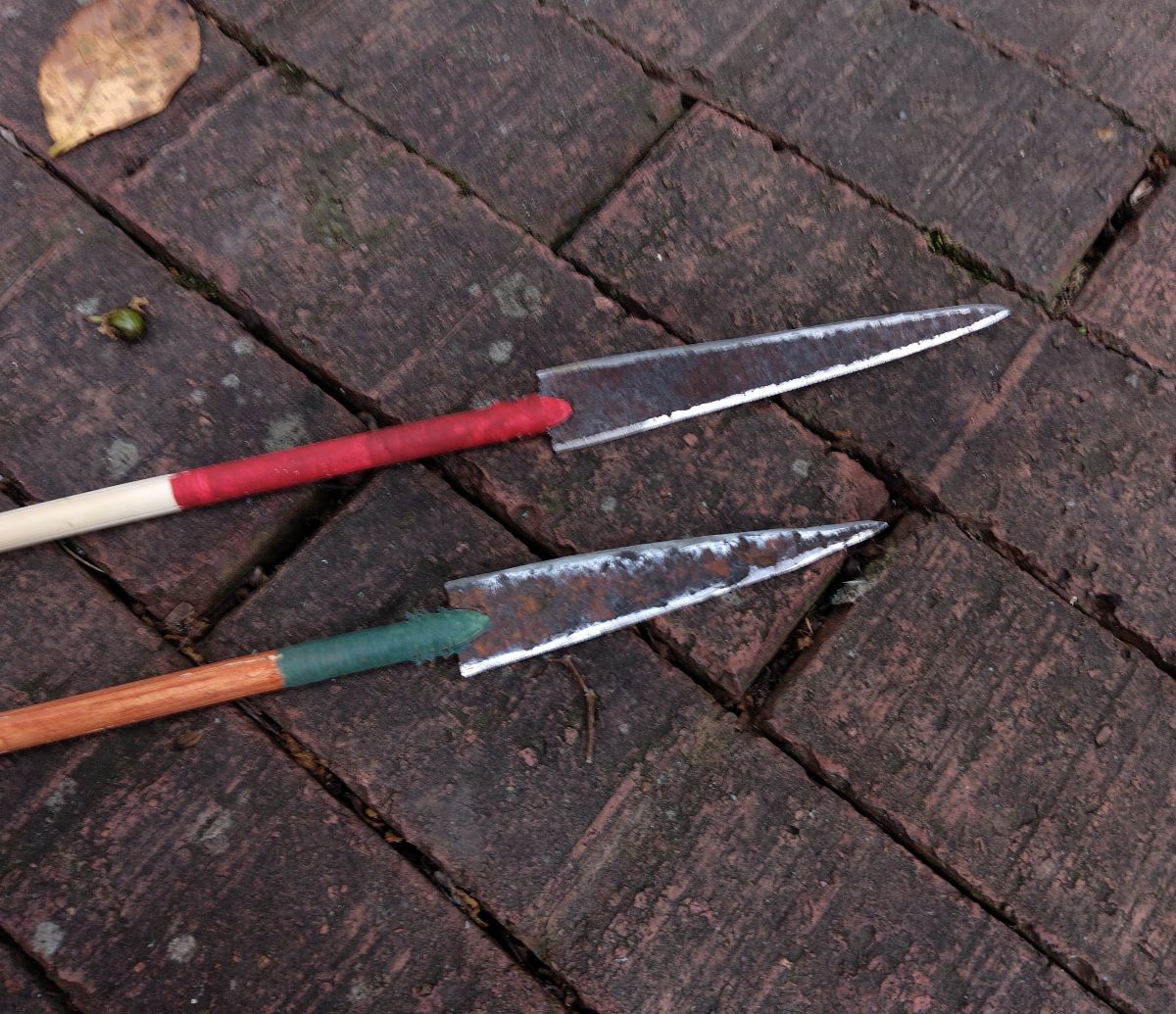
Two museum quality replica Sioux arrows for an order. These are copies of authentic Sioux arrows in museums.
-

These two replica Apache arrows copy authentic ones in the Smithsonian that were collected in the late 1800’s. One arrow is tipped with an iron point, the other has a white flint point. Free shipping within the U.S.
-
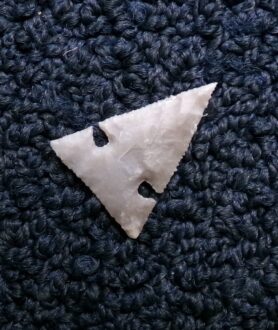
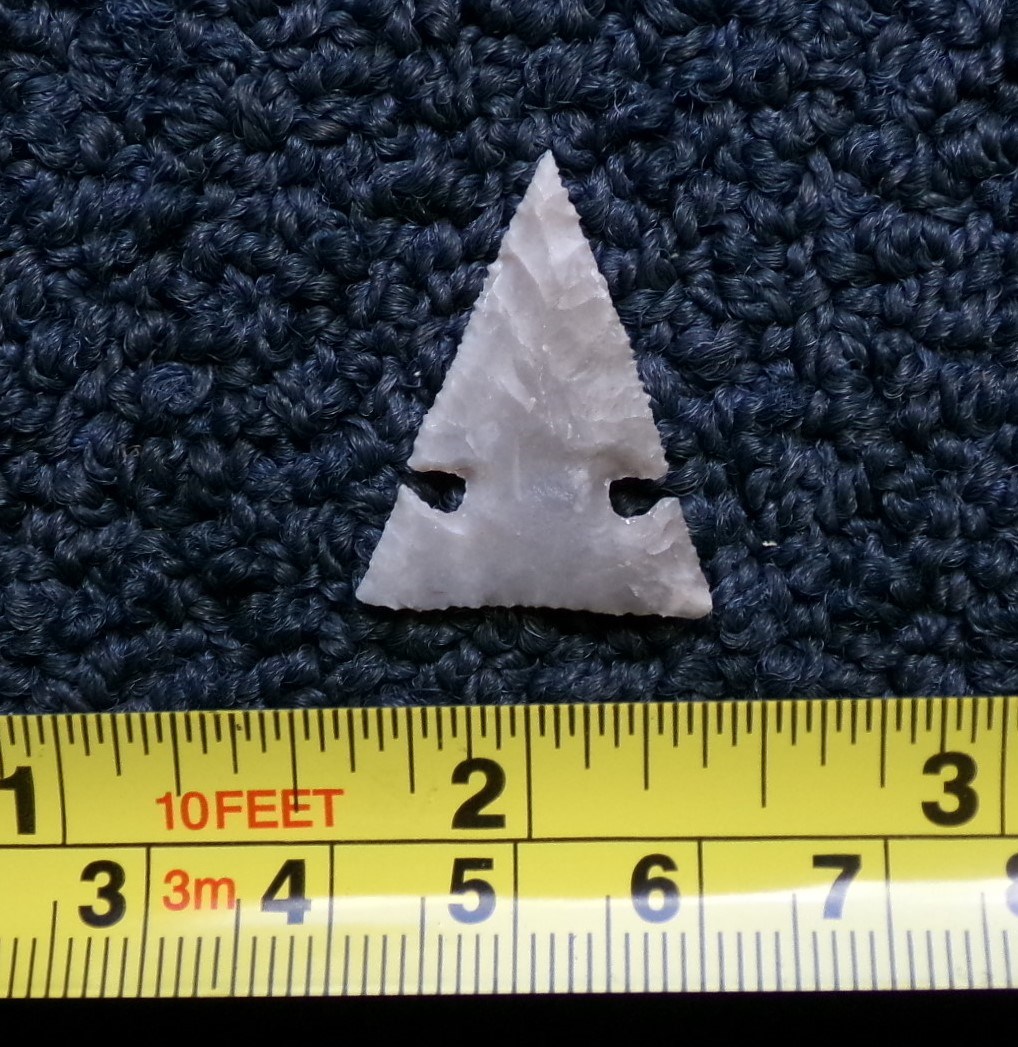
This exquisite little arrowhead is a copy of the kind that are found in southern California and would have once tipped the arrows of the Native Americans who roamed and hunted in the deserts of that region. These points have a distinct style of side notches that angle downward toward the base. This point is made of grey Georgetown flint from Texas. Free shipping within the U.S.
-
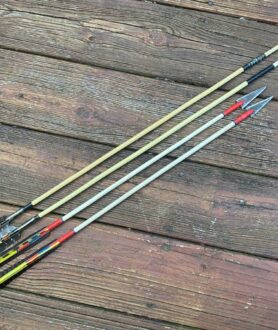
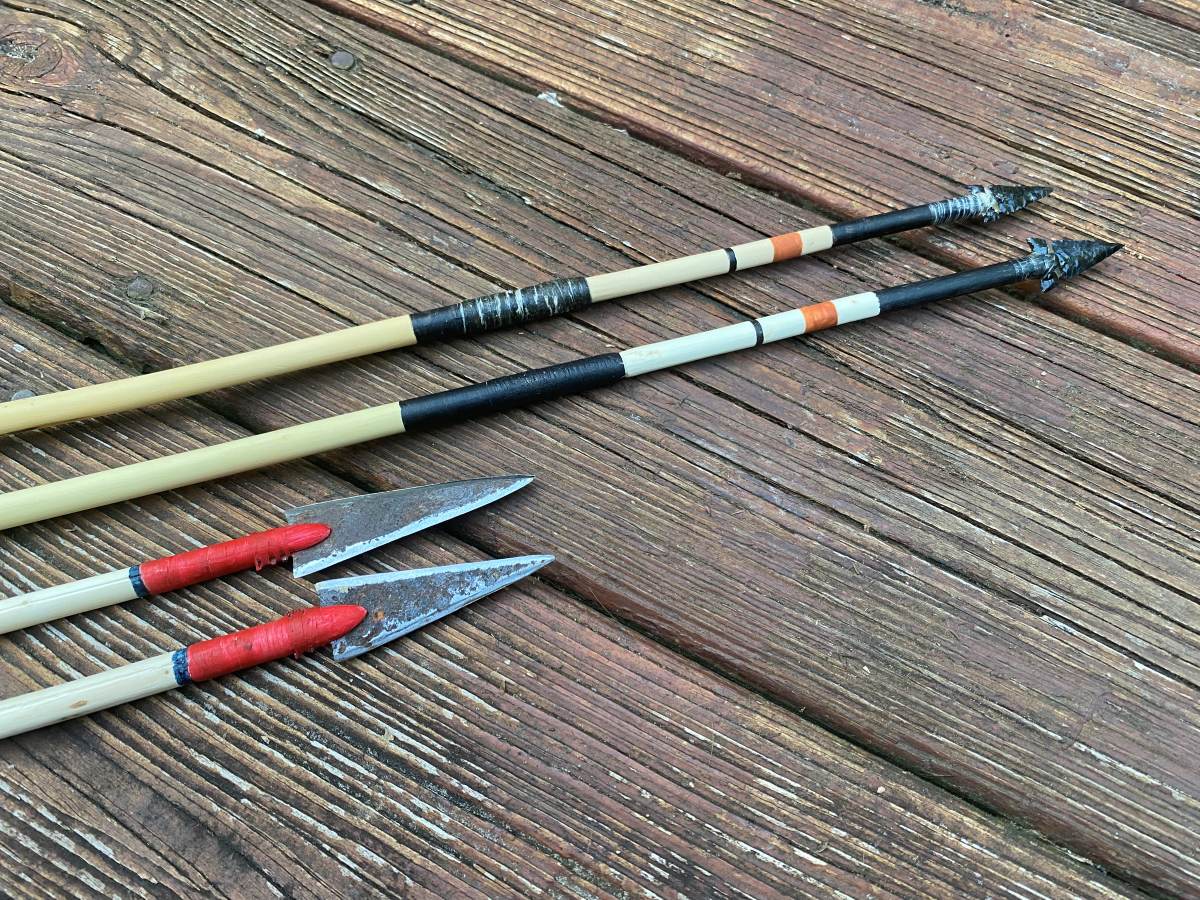
This group of replica arrows consists of 2 Wintu arrows from Northern California and 2 Pawnee arrows from the central Plains. The Wintu arrows have main shafts of syringa with hardwood shoot foreshafts tipped with obsidian points held with pine sap glue and deer sinew. They’re fletched with turkey wing feathers that are also held with sinew. The paint design copies those arrows exactly. These arrows copy a set of 15 matched Wintu arrows once owned by archery Hall of Famer Dr. Bert Grayson and are now in the archery collection at the Univ. of Missouri.
The Pawnee arrows are hardwood shoot shafts fletched with a mix of turkey wing and tail feathers. The wing feathers are set as the cock feather and are also dyed yellow. They’re secured front and back with deer sinew. The iron tips are made from old barrel hoops like the old ones were and they’re also held with a wrapping of deer sinew. These arrows are copied after a set of Pawnee arrows that were part of an entire archery set that included a bow, bowcase and quiver that was auctioned off several years ago and are now in a private collection.